Site.pro Site.pro
  • AI Website BuilderAI Website Builder
    • AI Website BuilderAI Website Builder
    • Online StoresOnline Stores
    • PricesPrices
    • CollaborationCollaboration
    • Website ImportWebsite Import
    • PluginsPlugins
    • Website BuilderWebsite Builder
    • TemplatesTemplates
    • For Design StudiosFor Design Studios
    • Useful LinksUseful Links
    • Affiliate ProgramAffiliate Program
    • We Build for YouWe Build for You
    • ExamplesExamples
    • LanguagesLanguages
  • DomainsDomains
    • Register Domain NameRegister Domain Name
    • Migrate DomainsMigrate Domains
    • For Domain InvestorsFor Domain Investors
    • Domain ZonesDomain Zones
    • DomainityDomainity
    • FAQ: DomainsFAQ: Domains
    • Popular Domain ZonesPopular Domain Zones
    • .com.com
    • .org.org
    • .net.net
    • .us.us
    • .co.co
  • EmailEmail
    • Free EmailFree Email
    • Email for BusinessEmail for Business
    • PricesPrices
    • Transfer EmailsTransfer Emails
    • Custom Domain EmailCustom Domain Email
    • FAQ: EmailFAQ: Email
    • Popular FAQsPopular FAQs
    • Email SetupEmail Setup
    • Auto ReplyAuto Reply
    • Auto ForwardingAuto Forwarding
    • Spam ProtectionSpam Protection
  • Accounting SoftwareAccounting Software
    • Accounting SoftwareAccounting Software
    • ModulesModules
    • PricesPrices
    • Integrations, APIIntegrations, API
    • Accounting Companies (391)Accounting Companies (391)
    • Software Integrators (52)Software Integrators (52)
    • Affiliate PartnersAffiliate Partners
    • Useful LinksUseful Links
    • Business TypesBusiness Types
    • Use CasesUse Cases
    • Accounting CompaniesAccounting Companies
    • Sole ProprietorSole Proprietor
    • InvoicingInvoicing
    • FarmerFarmer
    • E-commerceE-commerce
  • For ResellersFor Resellers
    • White LabelWhite Label
    • Revenue ShareRevenue Share
    • PricesPrices
    • PanelsPanels
    • How it WorksHow it Works
    • Marketing MaterialsMarketing Materials
    • Mass ImportMass Import
    • Our PartnersOur Partners
    • Reselling ExamplesReselling Examples
    • DocumentationDocumentation
    • Free WebsitesFree Websites
  • LearnLearn
    • Knowledge BaseKnowledge Base
    • BlogBlog
    • Growth HackingGrowth Hacking
    • For HostingsFor Hostings
    • For EducationFor Education
    • Website Сreation TutorialWebsite Сreation Tutorial
    • Teaching Institutions (70)Teaching Institutions (70)
    • Accounting Courses WorldwideAccounting Courses Worldwide
  • AI Website BuilderAI Website Builder
    • AI Website BuilderAI Website BuilderAI creates websites for you
    • Online StoresOnline StoresBuild online stores
    • PricesPricesAdvanced Features
    • CollaborationCollaborationCo-create websites live
    • Website ImportWebsite ImportImport Any Website
    • PluginsPluginsBuilder plugin and functions
    • Website BuilderWebsite BuilderKey Features
    • TemplatesTemplates200+ Awesome Templates
    • For Design StudiosFor Design StudiosBenefits for Design Studios
    • Useful LinksUseful Links
    • Affiliate ProgramAffiliate Program
    • We Build for YouWe Build for You
    • ExamplesExamples
    • LanguagesLanguages
  • DomainsDomains
    • Register Domain NameRegister Domain NameDomain registration, parking, transfer
    • Migrate DomainsMigrate DomainsTransfer. Connect. Renew
    • For Domain InvestorsFor Domain InvestorsDiscount on all domains
    • Domain ZonesDomain ZonesBuy New Domain Name
    • DomainityDomainityDomain usage by country
    • FAQ: DomainsFAQ: DomainsFind Answer
    • Popular Domain ZonesPopular Domain Zones
    • .com.com
    • .org.org
    • .net.net
    • .us.us
    • .co.co
  • EmailEmail
    • Free EmailFree EmailCreate email
    • Email for BusinessEmail for BusinessAdvanced features & protection
    • PricesPricesCheap email hosting
    • Transfer EmailsTransfer EmailsMigrate your mailboxes
    • Custom Domain EmailCustom Domain EmailEmail address with your domain
    • FAQ: EmailFAQ: EmailFind Answer
    • Popular FAQsPopular FAQs
    • Email SetupEmail Setup
    • Auto ReplyAuto Reply
    • Auto ForwardingAuto Forwarding
    • Spam ProtectionSpam Protection
  • Accounting SoftwareAccounting Software
    • Accounting SoftwareAccounting SoftwareCloud based ERP
    • ModulesModulesMain accounting software modules
    • PricesPrices30 days free trial
    • Integrations, APIIntegrations, APIIntegration with external systems
    • Accounting Companies (391)Accounting Companies (391)Choose your partner for accounting
    • Software Integrators (52)Software Integrators (52)Pick your integrations partner
    • Affiliate PartnersAffiliate PartnersPartners and Affiliate program
    • Useful LinksUseful LinksCalculators and Calendars
    • Business TypesBusiness TypesUse Cases
    • Use CasesUse Cases
    • Accounting CompaniesAccounting Companies
    • Sole ProprietorSole Proprietor
    • InvoicingInvoicing
    • FarmerFarmer
    • E-commerceE-commerce
  • For ResellersWhite LabelFor ResellersWhite Label
    • White LabelWhite LabelCustomise Builder
    • Revenue ShareRevenue ShareEarn 50% from each upgrade
    • PricesPricesRevenue Share. White Label
    • PanelsPanelsOne product for all platforms
    • How it WorksHow it WorksCloud or On-Premises
    • Marketing MaterialsMarketing MaterialsVideo. Mockups. Blocks
    • Mass ImportMass Import
    • Our PartnersOur Partners
    • Reselling ExamplesReselling Examples
    • DocumentationDocumentation
    • Free WebsitesFree Websites
  • LearnLearn
    • Knowledge BaseKnowledge BaseFAQ, Tutorial, Video
    • BlogBlogSite.pro Blog
    • Growth HackingGrowth HackingBoost your sales
    • For HostingsFor HostingsTips on marketing
    • For EducationFor EducationTraining. Tutorials
    • Website Сreation TutorialWebsite Сreation Tutorial
    • Teaching Institutions (70)Teaching Institutions (70)
    • Accounting Courses WorldwideAccounting Courses Worldwide
  • RegisterRegister
    Site.pro

    Create Your Account

    Get started — free and easy!

    Register

    By proceeding, you accept our Terms of Service and Privacy Policy
  • Log inLog in
    Site.pro

    Welcome back!

    Access your work space

    Log in

    New user? Create account
    Forgot password?
  • $
    $
  • EnglishEnglish
  • Hosting Tips (75)
  • Shared Hosting (20)
  • Web Design (19)
  • Marketing (8)
  • Education (8)
  • eCommerce (7)
  • Cloud Accounting (2)

Table of Contents:

Category
Search

Table of Contents:

Is SEO Dying? 10 Lifehacks to Boost Website AI Visibility in 2026

Is SEO Dying? 10 Lifehacks to Boost Website AI Visibility in 2026

SEO has changed over the past 2 years because of how more and more people rely on AI models rather than on traditional search engines. Now, there is an elephant in the room that business owners can’t ignore: is SEO still worth the effort when users stop googling?

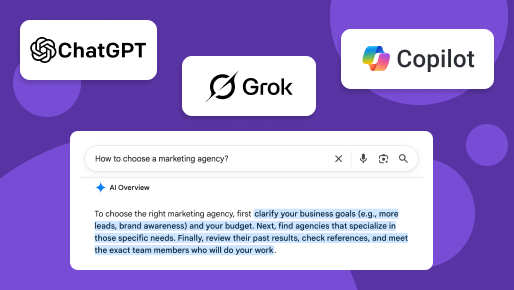
Google search is overcrowded with ads and low-quality top results. Users feel more comfortable asking ChatGPT or similar AI for recommendations. Google also adapted to this behaviour with making AI Overviews directly answer search questions. Why click through to a website when the answer is already there?

But here is the thing. That shift does not mean SEO is fading out. If anything, it makes SEO more important than ever.

Research by Tomasz Rudzki, who analysed 25,000 real user searches across multiple AI platforms, found that websites ranking number one on Google have roughly a 25% chance of appearing in AI search answers. The same pattern holds across ChatGPT, Perplexity, and Google AI Overviews. In other words, organic rankings remain one of the primary trust signals that AI systems rely on when deciding what to surface.

TL;DR: SEO is not dying, but it’s evolving. And if you won’t act faster, you risk being left behind.

How Does AI Search Actually Choose Its Sources?

Before getting into the practical tips, let's understand how AI search selects the content it uses as a reference.

Based on internal Google documents that surfaced during the US Department of Justice antitrust trial, the process generally follows three steps. First, the system identifies pages that are relevant and credible, leaning heavily on existing rankings. Second, it extracts the portions of content that most directly answer the user's question. Third, it synthesises those excerpts into a single, digestible response.

On top of that, there is a phenomenon known as query fan-out. When someone searches "SEO vs SEM", the AI does not just process that one query. It quietly runs a handful of related searches in parallel: things like "what is SEO", "what is SEM", and "difference between organic and paid search". This means your content could show up in an AI answer even if it does not rank for the primary keyword, as long as it is genuinely relevant to one of those sub-queries.

The implication is clear. A content strategy built around a single keyword is no longer enough. You need an interconnected web of content that can answer questions from multiple angles.

10 Lifehacks to Boost Website Visibility in 2026

So what does this look like in practice? Here are 10 actionable steps to strengthen your website's visibility in both traditional search and the growing ecosystem of AI-powered search.

Don't Abandon SEO. Upgrade It.

Strong organic rankings still matter because AI search draws heavily from pages that are already performing well. But the way we measure SEO success needs to evolve.

For years, the default metrics were rankings, traffic, and clicks. Those still matter, but they no longer tell the whole story. According to Search Engine Land, zero-click searches are on the rise while organic clicks continue to decline. Users are increasingly getting their answers directly on the search page without ever visiting a website.

That means the question has shifted. It is no longer just "how do I rank higher?" It is "how do I make sure my brand gets found, trusted, and recommended, whether by a human or by an AI?"

Write Content Around Real Questions

AI search is not looking for the longest article on a topic. It is looking for the most relevant, clearly written answer to a specific question. Content structured around real user questions tends to perform far better in AI-generated responses than sprawling, keyword-stuffed articles.

Tools like AnswerThePublic and AlsoAsked are excellent for uncovering the exact questions your audience is typing in. Once you have those, build them into your headings and subheadings rather than burying them mid-article. And one thing that often gets overlooked: do not bury the answer. If someone searches "is SEO still relevant in the AI era", they want a clear response in the first paragraph, not after scrolling through six paragraphs of context-setting.

Make Content Easy to Quote

One of the most common reasons content does not show up in AI answers is simple: the key information is too hard to find. It is buried inside a long paragraph, or the article meanders before getting to the point.

A good rule of thumb is to lead each section with its core idea, then follow up with explanation, examples, or supporting data. Use descriptive headings, keep paragraphs reasonably short, and write in a way that is easy to scan. This is not about dumbing things down. It is about making sure your best insights do not get lost in the noise. The easier your content is to understand, the easier it is for crawlers, AI systems, and human readers to make use of it.

Invest in E-E-A-T

Generic content is going to have a harder and harder time competing. When dozens of websites cover the same topic, what sets one apart is genuine expertise, real experience, and a perspective that is actually worth something.

That is the core of E-E-A-T:

  • Experience;
  • Expertise;
  • Authoritativeness;
  • Trustworthiness.

Google has been increasingly vocal about. Content that backs up its claims with original data, first-hand experience, credible sources, and insights from real practitioners consistently outperforms content that merely rephrases what is already out there.

This applies to AI-assisted content too. Google has made clear that AI-generated content is not inherently penalised. What matters is whether it genuinely helps users and has gone through a real editorial process to ensure accuracy and originality.

Build a Topic Cluster

Because of how query fan-out works, websites with a well-developed content ecosystem consistently outperform those relying on a single comprehensive article. The strategy is straightforward: create one strong pillar page that covers a broad topic, then build out a series of supporting articles that go deeper on specific subtopics and link them all together.

A pillar article on "SEO in the AI Era", for example, could be supported by pieces like:

  • How Google AI Overviews Work; A Beginner's Guide to Schema Markup; How to Read Your Google Search Console Data; Traditional SEO vs. AI Search Optimization;

This approach signals topical authority to search engines while also giving AI systems more entry points to discover and reference your content.

Technical Fundamentals Must be the First Step

Great content needs a solid technical foundation to perform. Data from the Web Almanac 2025 shows that overall SEO standards continue to improve. HTTPS adoption is above 91%, title tags are present on nearly 99% of pages, and canonical tag usage has climbed from 65% to over 67% in a single year.

That said, there is still room for improvement. Close to 33% of pages are still missing canonical tags, and the performance gap between desktop and mobile has not fully closed. A slow, unreliable website will undermine even the best content strategy. If crawlers cannot access your pages efficiently, your content simply will not be seen.

Choosing a reliable hosting provider is a bigger SEO decision than most people give it credit for. Hosting affects Core Web Vitals scores, server response times, and crawl budget efficiency. Regional providers such as Rumahweb in Southeast Asia focus on local server infrastructure and technical support for businesses operating in those markets. Whatever your choice, the principle remains the same: fast and stable hosting is a prerequisite for strong SEO performance.

Implement Schema Markup

Schema markup from Schema.org gives search engines and AI systems a cleaner way to understand what your page is actually about. Rather than inferring context from plain text, the AI can read structured signals that tell it whether the page contains an article, a product listing, a FAQ section, or a local business profile.

  • For blog posts: use Article schema; For product pages: use Product schema; For local businesses: use LocalBusiness schema to surface address, hours, and contact information; For question-and-answer content: use FAQ schema;

Structured data will not automatically push you up the rankings, but it makes your content significantly easier to classify, index, and display, particularly in AI-driven search environments where context matters more than ever.

Start Thinking About Your Bot Strategy

For most of SEO's history, robots.txt was mainly about managing Googlebot and Bingbot. That has changed. AI crawlers like GPTBot, ClaudeBot, and CCBot are now actively indexing content across the web, and websites are starting to take notice.

According to the Web Almanac 2025, GPTBot blocking increased by approximately 55% in a single year, while ClaudeBot blocking nearly doubled. This reflects a broader shift in how website owners think about crawler access: not just as a technical issue but as a strategic one. Deciding which AI crawlers can access your content and which pages they should or should not see is quickly becoming a core part of managing your brand's visibility in the AI search landscape.

Track AI Visibility, Not Keyword Rankings

Traditional metrics like keyword rankings, organic clicks, and CTR are still worth tracking. But Ahrefs research found that the presence of an AI Overview correlates with a drop in CTR of up to 58% for pages ranking in the top positions. A page can hold its position in the rankings while losing a significant share of its traffic, simply because users get their answer from the AI summary instead.

This means visibility now has two dimensions worth paying attention to. It is worth manually checking how your brand appears across AI platforms. Search for key questions related to your industry on ChatGPT, Perplexity, and Google AI Overviews, and see whether your content is being cited. As dedicated AI visibility tracking tools continue to mature, building this into your regular reporting will become increasingly important.

Build Brand Authority Across Multiple Channels

Search engines and AI systems do not evaluate a website in isolation. They pick up trust signals from across the web, including:

  • Quality backlinks from reputable publications;
  • Brand mentions in industry media;
  • User reviews across platforms;
  • onsistent NAP (name, address, phone) information across business directories;
  • An active presence in relevant online communities

The more your brand is referenced by credible, relevant sources, the more likely it is to be treated as a trustworthy authority by both Google and the AI systems that increasingly shape what people discover online. That means SEO in 2026 needs to be part of a broader brand-building strategy. Your website is the hub, but your presence on social media, in industry publications, on Google Business Profile, and across other platforms all feed into the same ecosystem of trust and authority.

TLDR: Where to Start?

Use this table to quickly improve your SEO and AI visibility.

{beginblock layout="text"}
Lifehack Concrete Action Expected Impact
Don't abandon SEO. Upgrade it. Track rankings in GSC + weekly AI mention checks in ChatGPT, Perplexity, and Google AI Overviews AI still uses strong Google rankings as a top trust signal
Write content around real questions. Use AnswerThePublic and AlsoAsked; answer each question in the first 80–100 words AI favours direct, question-first content
Make content easy to quote. Use short paragraphs, bold key takeaways at the start of sections, and descriptive headings AI can easily extract and cite your insights
Invest in E-E-A-T. Add author bio with credentials, original case studies, and 3–5 reputable sources Stands out from generic AI-generated content
Build a topic cluster. Create one pillar page + 8–15 supporting articles with strong internal linking Supports query fan-out and gives AI multiple entry points
Prioritise technical fundamentals. Achieve 90+ PageSpeed score on mobile, proper canonicals, and fast hosting (<200ms response) Ensures all crawlers (including AI bots) can access your site
Implement schema markup. Add Article schema to posts and FAQPage schema to question content Helps AI better understand and display your content
Manage your bot strategy. Update robots.txt to control GPTBot, ClaudeBot, and other AI crawlers You decide which AI systems can index or train on your content
Track AI visibility. Weekly manual searches of your top topics in Perplexity, ChatGPT, and Google AI Overviews Measures real AI citations beyond traditional rankings
Build brand authority across channels. Earn 2–4 quality backlinks monthly, optimise Google Business Profile, and collect reviews Strengthens holistic trust signals for both Google and AI

Conclusion

SEO is still very much alive, and AI has only raised the stakes. Websites with strong organic foundations are better positioned to appear in AI-generated answers, which means the work you put into SEO today has more leverage than ever.

What needs to change is the approach. Content should be built around specific, answerable questions. Technical SEO needs to be airtight. And brand authority needs to be developed consistently, not just on your own website but across the broader digital landscape.

The websites that win in 2026 will not just be the ones with the highest rankings. They will be the ones that are fast, secure, credible, easy to understand, and genuinely useful to the people they are trying to reach. That starts with reliable hosting and a solid technical foundation — the kind that lets you focus on content and authority rather than keeping the lights on.

SEO for Small Businesses in 2026: What Matters Most & What It Will Cost You
© Site.pro 2011. Website Builder. United States.
Contact SalesContact SalesTerms of ServiceTerms of ServicePrivacy PolicyPrivacy PolicyCookie SettingsCookie Settings