Site.pro
  • Trình tạo website AI
    • Trình tạo website AI
    • Giá cả
    • Cửa hàng trực tuyến
    • Sự hợp tác
    • Nhập trang web
    • bổ sung
    • Trình tạo trang web
    • Mẫu giao diện
    • Dành cho xưởng thiết kế
    • Ngôn ngữ
    • Chương trình Giới thiệu
    • Các ví dụ
    • Dành cho nhà đầu tư tên miền
    • Chúng tôi xây dựng cho bạn
  • Tên miền
  • Thư điện tử
  • Phần mềm kế toán
    • Phần mềm kế toán
    • Các mô-đun
    • Giá cả
    • Tích hợp, API
    • Công ty kế toán (366)
    • Nhà tích hợp (48)
    • Đối tác liên kết
    • Liên kết hữu ích
    • Loại hình doanh nghiệp
    • Công ty kế toán
    • Doanh nghiệp cá nhân
    • Hóa đơn
    • Farmer
    • Thương mại điện tử
  • Cho Đại Lý
    • Giá cả
    • Nhãn trắng
    • Chia sẻ lợi nhuận
    • Panels
    • Nó hoạt động thế nào
    • Tài liệu tiếp thị
    • Nhập hàng loạt
    • Đối tác của chúng tôi
    • Ví dụ về bán lại
    • Tài liệu
    • Website miễn phí
  • Học hỏi
    • Cơ sở kiến thức
    • Hướng dẫn
    • Blog
    • Phát triển Hacking
    • Dành cho máy chủ lưu trữ
    • Tên miền
    • Dành cho giáo dục
    • Kế toán: Bắt đầu công việc
    • Các cơ sở giáo dục (68)
    • Khóa học kế toán trên toàn thế giới
    • Khóa học Trực tuyến về Kế toán UAE
  • Trình tạo website AI
    • Trình tạo website AIAI tạo trang web cho bạn
    • Giá cảCác tính năng tiên tiến
    • Cửa hàng trực tuyếnXây dựng cửa hàng trực tuyến
    • Sự hợp tácLàm việc cùng nhau
    • Nhập trang webNhập bất kỳ website nào
    • bổ sungPlugin xây dựng và chức năng
    • Trình tạo trang webCác tính năng chính
    • Mẫu giao diện200+ Mẫu Tuyệt Vời
    • Dành cho xưởng thiết kếLợi ích cho các Studio thiết kế
    • Ngôn ngữ
    • Chương trình Giới thiệu
    • Các ví dụ
    • Dành cho nhà đầu tư tên miền
    • Chúng tôi xây dựng cho bạn
  • Tên miền
  • Thư điện tử
  • Phần mềm kế toán
    • Phần mềm kế toánERP dựa trên đám mây
    • Các mô-đunCác mô-đun kế toán chính
    • Giá cảDùng thử miễn phí 30 ngày
    • Tích hợp, APITích hợp với các hệ thống bên ngoài
    • Công ty kế toán (366)Chọn đối tác kế toán của bạn
    • Nhà tích hợp (48)Chọn đối tác tích hợp của bạn
    • Đối tác liên kếtChương trình Liên kết
    • Liên kết hữu íchCalculators and Calendars
    • Loại hình doanh nghiệpTrường hợp sử dụng
    • Công ty kế toán
    • Doanh nghiệp cá nhân
    • Hóa đơn
    • Farmer
    • Thương mại điện tử
  • Cho Đại LýNhãn trắng
    • Giá cảChia sẻ lợi nhuận. Nhãn trắng
    • Nhãn trắngBuilder tuỳ chỉnh
    • Chia sẻ lợi nhuậnKiếm 50% từ mỗi lần nâng cấp
    • PanelsSản phẩm đa nền tảng
    • Nó hoạt động thế nàoĐám mây hoặc Mặt bằng
    • Tài liệu tiếp thịBăng hình. Mô phỏng. Khối
    • Nhập hàng loạt
    • Đối tác của chúng tôi
    • Ví dụ về bán lại
    • Tài liệu
    • Website miễn phí
  • Học hỏi
    • Cơ sở kiến thứcFAQ: Trình tạo, Kế toán
    • Hướng dẫnTải xuống miễn phí
    • BlogSite.pro Blog
    • Phát triển HackingTăng doanh số bán hàng của bạn
    • Dành cho máy chủ lưu trữMẹo tiếp thị
    • Tên miềnSử dụng tên miền theo quốc gia
    • Dành cho giáo dụcĐào tạo. Hướng dẫn
    • Kế toán: Bắt đầu công việc
    • Các cơ sở giáo dục (68)
    • Khóa học kế toán trên toàn thế giới
    • Khóa học Trực tuyến về Kế toán UAE
  • Đăng ký
    Bằng cách đăng ký, bạn chấp nhận Điều khoản dịch vụ Của chúng tôi
  • Đăng nhập

    Đăng nhập

    Người dùng mới? Tạo tài khoản
    Quên mật khẩu?
  • $
  • Tiếng Việt

In-house or Commercial: What Panel is the Best for Hosting Companies?

In-house or Commercial: What Panel is the Best for Hosting Companies?
Blog: Shared Hosting

In September 2025, Site.pro’s team took part in the Domain Summit in London. During the event, we shared experiences with Frederick Schiwek of Hosting.de, who gave valuable insights regarding web hosting panel development.

CEOs of both hosting companies and website builders face a difficult decision: whether to develop their own hosting panel or resort to commercial panels. The choice of a management system has a drastic impact on the business’s growth and on customer satisfaction.

Popular commercial solutions include panels such as WHMCS, Blesta, Hostbill, and Upmind. But what is better for the business: using one of the options mentioned above, or creating a custom solution?

In-house Panel: Pros and Cons

Advantages

Developing a custom panel gives hosting companies full control over its functions. The panel can be optimised for specific business processes, with no limitations imposed by third-party developers. Complete control also leads to high security—since all the data is processed and stored in-house, the team can immediately take action in case of an emergency and neutralise any security vulnerability on the spot. It is also easier to follow specific data protection regulations when your company is responsible for the product.

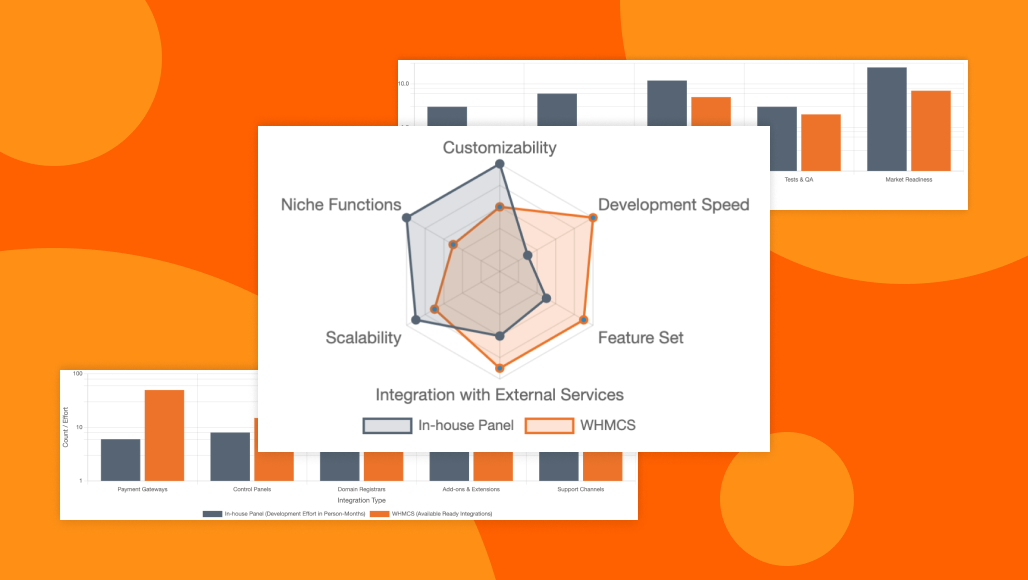
Flexibility and features comparison of two types of panelsFlexibility and features comparison of two types of panels

Moreover, developers can customise the panel however they want—setting up seamless connections to internal systems, including CRM, ERP, and customer support. The in-house panel also allows more room for future improvement.

As a product created by the hosting company itself, it does not come with any licence fees. Not only does this save money in the long term, it also allows the business to scale and grow more effectively, as in-house panels are not subject to licence restrictions. In this way, in-house panels become a competitive advantage for the business—a unique product optimised for the best customer experience.

Disadvantages

Still, in-house development has its own practical issues that need to be taken into consideration. The most obvious is the high cost that comes with developing a brand-new hosting panel. Creating a product from scratch requires significant investments in both time and resources. The process itself can take multiple years until the panel is finalised and ready for use. And even once it is finished, it requires proper maintenance and infrastructure. The responsibility for security, testing, and quality also lies on the shoulders of the development team.

Time comparison: in-house panels (months) vs. WHMCS (days)Time comparison: in-house panels (months) vs. WHMCS (days). Source: Frederick Schiwek's presentation for Domain Summit 2025

In-house vs Commercial Solution

Customisation Market entry Functionality Scalability Cost
In-house Unlimited Slow Need development High Unpredictable
Commercial Limited Fast Ready to use Low Predictable

Commercial SaaS panels are ready for installation and use upon purchase. The initial investment is low, and returns are quick. Costs are predictable from the start, with a monthly or annual licence fee based on the number of the company’s customers. This allows for fast market entry, as all core functions are available and configuration does not require programming.

Overall, domain and customer management are much easier on commercial panels, simply because these products have been in development for years. Much of their functionality has already been extensively tested, and their systems are mature and reliable. Commercial panels also often come with built-in billing from the start, whereas in-house development of such features is complex and expensive.

The Issue of In-house Development

The development of hosting panels in-house is complex, expensive, and carries significant risks. Aside from the panel itself, companies have to set up a support system, create and maintain documentation, and plan and test every feature of the product. When an important member of the team leaves, the product is affected. Meanwhile, commercial solutions have established communities, forums, and integrations with payment gateways, registrars, and more.

Ecosystem comparidson: development effort vs. available integrationsEcosystem comparidson: development effort vs. available integrations. Source: Frederick Schiwek's presentation for Domain Summit 2025

Should you Develop Your own Panel?

The short answer is yes—but there are nuances to consider. Your decision should be based first and foremost on the goals, budget, and resources of your company.

Key decision factors:

  • Company size and resources;
  • Specific requirements and niche market;
  • Growth plans;
  • Technical expertise of the team;
  • Development time.

Hosting.de Recommends

  • For startups — it is more reasonable to purchase a commercial solution for a quick launch, low risk, and cost-effectiveness.
  • For medium size or large companies — it makes sense to develop your own product when your requirements are specific and you are prepared to invest substantial resources into development. A hybrid approach also works—it is possible to buy a commercial panel as a base for future customisations.
  • Niche providers with special needs — if your goal is to provide customers with custom solutions and unique services, the in-house panel is the best option, as standard commercial panels cannot cover everything.

Final Thoughts

Choosing between an in-house panel and a commercial solution is ultimately a strategic decision that depends on a company’s size, resources, and long-term goals. Commercial panels offer speed, affordability, and reliability, while in-house solutions can prove to be a worthwhile investment with a competitive advantage over other options.

There is no one-size-fits-all answer—what matters most is aligning the choice of hosting panel with your business objectives, technical capabilities, and vision for the future.

Quay lại
How to Increase Traffic and Hosting Sales With AI Website Builder
Kế tiếp
Boost Your Sales: White Label vs Revenue Share
© Site.pro 2011. Trình tạo trang web. Hoa Kỳ.
Liên hệ bán hàngĐiều khoản dịch vụChính sách bảo mật