Site.pro
  • 人工智能網站建設者
    • 人工智能網站建設者
    • 价格
    • 网上商店
    • 合作
    • 网站导入
    • 外挂程式
    • 网站构建工具
    • 模板
    • 对于设计工作室
    • 语言
    • 推广联盟
    • 范例
    • 适合域名投资者
    • 我们为您打造
  • 域名
  • 電子邮件
  • 会计软件
    • 会计软件
    • 模块
    • 价格
    • 集成, API
    • 会计公司 (366)
    • 软件集成商 (48)
    • 合作伙伴
    • 有用的链接
    • 业务类型
    • 会计公司
    • 个体经营者
    • 发票
    • Farmer
    • 电子商务
  • 针对分销商
    • 价格
    • 白色标签
    • 收入份额
    • 面板
    • 如何参与
    • 营销材料
    • 大量进口
    • 我们的合作伙伴
    • 再售例子
    • 文档
    • 免费网站
  • 學
    • 知识库
    • 教程
    • 博客
    • 成長駭客
    • 对于托管
    • 领域性
    • 用于培训
    • 会计: 工作开始
    • 教育机构 (68)
    • 全球会计课程
    • 阿联酋会计在线课程
  • 人工智能網站建設者
    • 人工智能網站建設者AI 为你创建网站
    • 价格高级功能
    • 网上商店建立在线商店
    • 合作实时协同工作
    • 网站导入导入任何网站
    • 外挂程式构建器插件和功能
    • 网站构建工具关键特性
    • 模板200+ 精彩模板
    • 对于设计工作室设计工作室的益处
    • 语言
    • 推广联盟
    • 范例
    • 适合域名投资者
    • 我们为您打造
  • 域名
  • 電子邮件
  • 会计软件
    • 会计软件基于云的ERP
    • 模块主要会计软件模块
    • 价格免费试用 30 天
    • 集成, API与外部系统集成
    • 会计公司 (366)选择您的会计合作伙伴
    • 软件集成商 (48)选择您的集成合作伙伴
    • 合作伙伴合作伙伴与联盟计划
    • 有用的链接Calculators and Calendars
    • 业务类型用例
    • 会计公司
    • 个体经营者
    • 发票
    • Farmer
    • 电子商务
  • 针对分销商白色标签
    • 价格收入份额. 白色标签
    • 白色标签自定义建站工具
    • 收入份额从每次升级中赚取 50%
    • 面板全平台统一产品
    • 如何参与云或本地
    • 营销材料视频. 模型. 块
    • 大量进口
    • 我们的合作伙伴
    • 再售例子
    • 文档
    • 免费网站
  • 學
    • 知识库常见问题: 建造者, 会计
    • 教程免费下载
    • 博客Site.pro 博客
    • 成長駭客促进销售
    • 对于托管营销技巧
    • 领域性按国家/地区划分的域名使用情况
    • 用于培训训练. 教程
    • 会计: 工作开始
    • 教育机构 (68)
    • 全球会计课程
    • 阿联酋会计在线课程
  • 注册
    通过注册,您接受我们的服务条款
  • 登录

    登录

    新用户? 创建账户
    忘记密码?
  • $
  • 简体

In-house or Commercial: What Panel is the Best for Hosting Companies?

In-house or Commercial: What Panel is the Best for Hosting Companies?
博客: Shared Hosting

In September 2025, Site.pro’s team took part in the Domain Summit in London. During the event, we shared experiences with Frederick Schiwek of Hosting.de, who gave valuable insights regarding web hosting panel development.

CEOs of both hosting companies and website builders face a difficult decision: whether to develop their own hosting panel or resort to commercial panels. The choice of a management system has a drastic impact on the business’s growth and on customer satisfaction.

Popular commercial solutions include panels such as WHMCS, Blesta, Hostbill, and Upmind. But what is better for the business: using one of the options mentioned above, or creating a custom solution?

In-house Panel: Pros and Cons

Advantages

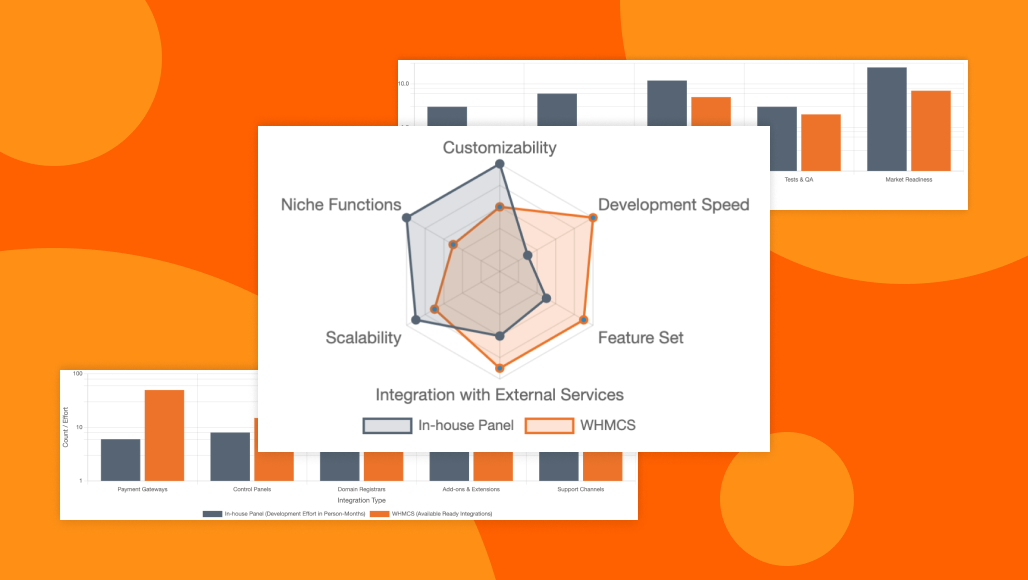
Developing a custom panel gives hosting companies full control over its functions. The panel can be optimised for specific business processes, with no limitations imposed by third-party developers. Complete control also leads to high security—since all the data is processed and stored in-house, the team can immediately take action in case of an emergency and neutralise any security vulnerability on the spot. It is also easier to follow specific data protection regulations when your company is responsible for the product.

Flexibility and features comparison of two types of panelsFlexibility and features comparison of two types of panels

Moreover, developers can customise the panel however they want—setting up seamless connections to internal systems, including CRM, ERP, and customer support. The in-house panel also allows more room for future improvement.

As a product created by the hosting company itself, it does not come with any licence fees. Not only does this save money in the long term, it also allows the business to scale and grow more effectively, as in-house panels are not subject to licence restrictions. In this way, in-house panels become a competitive advantage for the business—a unique product optimised for the best customer experience.

Disadvantages

Still, in-house development has its own practical issues that need to be taken into consideration. The most obvious is the high cost that comes with developing a brand-new hosting panel. Creating a product from scratch requires significant investments in both time and resources. The process itself can take multiple years until the panel is finalised and ready for use. And even once it is finished, it requires proper maintenance and infrastructure. The responsibility for security, testing, and quality also lies on the shoulders of the development team.

Time comparison: in-house panels (months) vs. WHMCS (days)Time comparison: in-house panels (months) vs. WHMCS (days). Source: Frederick Schiwek's presentation for Domain Summit 2025

In-house vs Commercial Solution

Customisation Market entry Functionality Scalability Cost
In-house Unlimited Slow Need development High Unpredictable
Commercial Limited Fast Ready to use Low Predictable

Commercial SaaS panels are ready for installation and use upon purchase. The initial investment is low, and returns are quick. Costs are predictable from the start, with a monthly or annual licence fee based on the number of the company’s customers. This allows for fast market entry, as all core functions are available and configuration does not require programming.

Overall, domain and customer management are much easier on commercial panels, simply because these products have been in development for years. Much of their functionality has already been extensively tested, and their systems are mature and reliable. Commercial panels also often come with built-in billing from the start, whereas in-house development of such features is complex and expensive.

The Issue of In-house Development

The development of hosting panels in-house is complex, expensive, and carries significant risks. Aside from the panel itself, companies have to set up a support system, create and maintain documentation, and plan and test every feature of the product. When an important member of the team leaves, the product is affected. Meanwhile, commercial solutions have established communities, forums, and integrations with payment gateways, registrars, and more.

Ecosystem comparidson: development effort vs. available integrationsEcosystem comparidson: development effort vs. available integrations. Source: Frederick Schiwek's presentation for Domain Summit 2025

Should you Develop Your own Panel?

The short answer is yes—but there are nuances to consider. Your decision should be based first and foremost on the goals, budget, and resources of your company.

Key decision factors:

  • Company size and resources;
  • Specific requirements and niche market;
  • Growth plans;
  • Technical expertise of the team;
  • Development time.

Hosting.de Recommends

  • For startups — it is more reasonable to purchase a commercial solution for a quick launch, low risk, and cost-effectiveness.
  • For medium size or large companies — it makes sense to develop your own product when your requirements are specific and you are prepared to invest substantial resources into development. A hybrid approach also works—it is possible to buy a commercial panel as a base for future customisations.
  • Niche providers with special needs — if your goal is to provide customers with custom solutions and unique services, the in-house panel is the best option, as standard commercial panels cannot cover everything.

Final Thoughts

Choosing between an in-house panel and a commercial solution is ultimately a strategic decision that depends on a company’s size, resources, and long-term goals. Commercial panels offer speed, affordability, and reliability, while in-house solutions can prove to be a worthwhile investment with a competitive advantage over other options.

There is no one-size-fits-all answer—what matters most is aligning the choice of hosting panel with your business objectives, technical capabilities, and vision for the future.

以前的
How to Increase Traffic and Hosting Sales With AI Website Builder
下一个
Boost Your Sales: White Label vs Revenue Share
© Site.pro 2011. 网站构建工具. 美国.
联系销售服务条款隐私政策